
How Did Goli Soda Make a Comeback?
There was a time when opening a Goli Soda was an experience of its own.
A chilled glass bottle. A marble trapped inside the neck. One quick push—and pop! The fizz was released.
For many people, especially those who grew up in the 1990s, Goli Soda was a familiar part of summer, roadside soda shops and local celebrations.
Then, it slowly faded from everyday life.
Today, that little marble bottle is finding its way back.
More Than Just a Soda Bottle
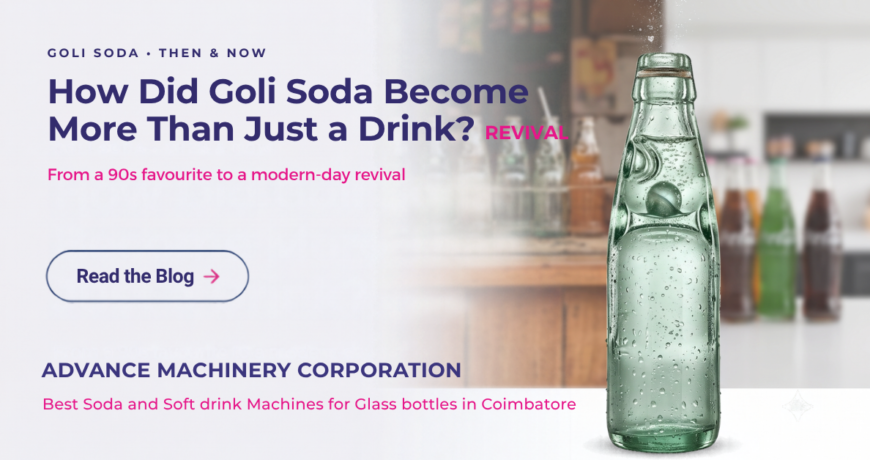
The famous Goli Soda bottle is a Codd-neck bottle, a design patented by Hiram Codd in 1872.
Unlike an ordinary bottle, the glass marble and rubber seal helped keep the carbonated drink under pressure. The marble itself became part of the opening experience.
That simple design gave Goli Soda something many modern soft drinks do not have—a memorable way of opening the drink.
When Goli Soda Lost Its Place
During the 1990s, India’s soft-drink market changed rapidly.
Large beverage brands expanded their distribution and introduced highly visible packaging and advertising. Compared with these mass-market products, locally produced Goli Soda faced challenges in distribution, bottle handling and competition.
The traditional glass bottle also required collection, cleaning and reuse.
Goli Soda did not disappear completely, but it became less common in many places.
What was once an everyday drink gradually became something people remembered from childhood.
Then the Old Bottle Became New Again
The story changed when local beverage makers began bringing Goli Soda back with a more contemporary identity.
The familiar glass bottle remained, but the presentation became more modern. Traditional favourites such as Panneer Soda continued alongside newer flavour choices, while some brands explored different packaging formats.
This made the drink interesting to two very different audiences.
For older consumers, it brought back a familiar memory.
For younger consumers, the marble bottle offered something they had rarely experienced before.
The drink was no longer simply an old-fashioned soda.
It became a modern take on a traditional Indian beverage.
From Local Soda Shops to Wider Markets
The revival has also changed where Goli Soda can be found.
What was once strongly associated with neighbourhood soda shops is now appearing in restaurants, supermarkets and modern retail spaces.
The trend has even moved beyond India. In 2025, APEDA announced the international launch of Goli Pop Soda , including trial shipments to markets such as the USA, UK, Europe and the Gulf.
The journey is quite remarkable:
Local drink → 90s favourite → gradual decline → nostalgic revival → modern beverage.
The Bottle May Be Traditional. The Production Isn't.
Behind the familiar marble bottle is a modern beverage production process.
Water treatment, chilling, carbonation, bottle rinsing, filling and capping all contribute to producing a consistent carbonated drink.
For businesses producing Goli Soda in glass bottles, modern soda and soft drink machines for glass bottles can be designed around different production requirements.
For businesses exploring PET packaging, soda and soft drink machines for PET bottles offer another production route.
This is where choosing the right Goli Soda Machine Manufacturer becomes important. The bottle, carbonation method, filling system and expected production volume all need to work together.
The Little Marble Still Has a Story to Tell
Goli Soda has gone through more than one generation of change.
The drink may have lost some of its popularity when the Indian beverage market became more competitive, but the experience of opening that marble bottle was never completely forgotten.
Today, that experience is helping Goli Soda find a new place.
The bottle is familiar. The flavours can evolve. The packaging can change. But the pop remains the same.
And sometimes, that is all it takes to make an old favourite interesting again.
